A Simple Protocol That Science Says Actually Works
We’re constantly bombarded with complex wellness routines: ice baths, breathwork protocols, expensive supplements. But what if resetting your frazzled nervous system could be as simple as turning off the bathroom light?
Dr. Dominic Ng’s “dark shower protocol” sounds almost too easy to work. Yet the neuroscience behind it is surprisingly robust, involving your circadian rhythm, visual processing system, and cardiovascular response all at once.
Below, you’ll find an in-depth exploration of why showering in darkness might be one of the most effective (and accessible) tools for nervous system regulation available. No special equipment needed—just your shower, some warm water, and the willingness to stand in the dark for a few minutes.
The following article is shared with permission from Metabolic Uncle.
RESET YOUR NERVOUS SYSTEM WITH THE DARK SHOWER PROTOCOL
Your nervous system is fried. Not from one bad day. From ten thousand small assaults. Every fluorescent tube. Every notification. Every decision about what to eat, wear, say. The body keeps score, and the score is: you’re losing.
Dr. Dominic Ng, a neuroscientist studying neurodegeneration, offers a prescription that sounds almost insulting in its simplicity. Shower in the dark. No cold plunge. No Wim Hof breathing. Just turn off the bathroom light and stand under warm water.
Most people will dismiss this. They want protocols with more steps, more suffering, more Instagram potential. But dismissing it means missing how three separate physiological systems converge in your shower stall to produce what commercial float tanks charge $80 per session to deliver.
THE BATHROOM PARADOX
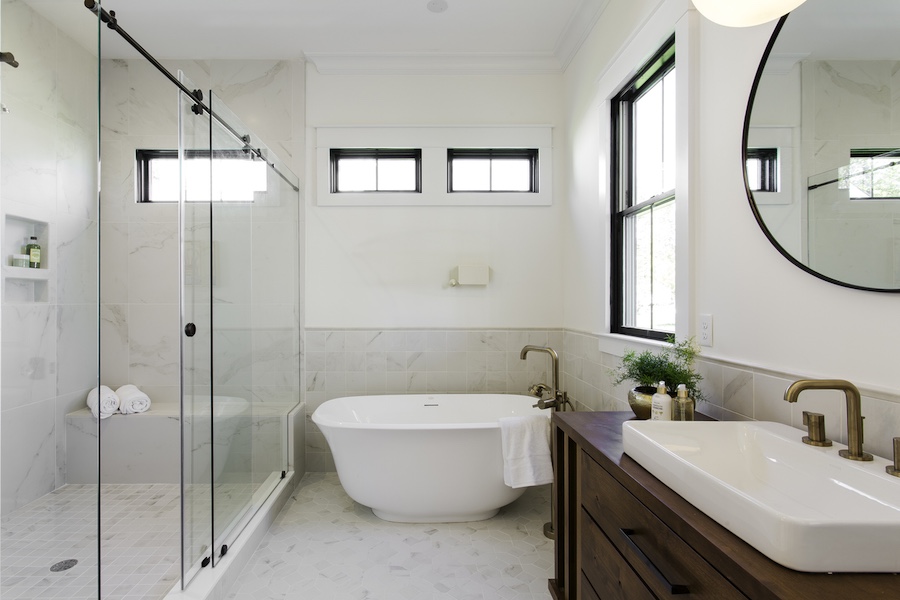
You dim your living room lights at night. Maybe you enable Night Shift on your phone. Then you walk into a bathroom lit like an operating theater.
Modern bathrooms exist for precision tasks. Shaving. Makeup. Tile grout inspection. They’re designed with white reflective surfaces and LED vanity lights pumping out 500+ lux of blue-enriched light. The room you use to prepare for sleep is the room most likely to prevent it.
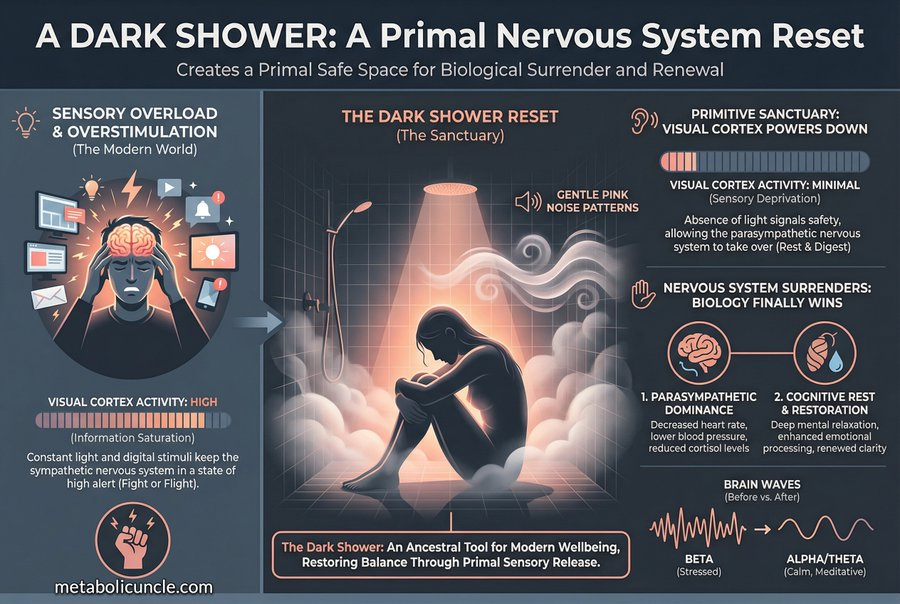
When that light blast hits your retina, it reaches intrinsically photosensitive retinal ganglion cells. These aren’t for seeing images. They detect brightness and report directly to your suprachiasmatic nucleus, the brain’s master clock. The clock interprets the signal as sunrise. It tells your pineal gland to stop producing melatonin immediately.
Brief evening exposure to bright light suppresses melatonin by over 50% and delays your circadian phase. You get mini-jetlag before bed.
A dark shower solves this. Keep the lights off, the ipRGCs stay quiet, the clock keeps signaling nighttime, melatonin production continues.
VISION IS EXPENSIVE
Seeing feels passive. You open your eyes, the world appears. From a metabolic standpoint, seeing is brutally expensive.
Roughly 30% of your cortex handles visual processing. When your eyes are open in a lit room, your retina converts photons to electrical signals at about 10 million bits per second. Your brain processes this flood continuously. Edge detection. Motion tracking. Object categorization. Reading every shampoo bottle label and grout line. Every visual element demands categorization and threat assessment. This processing burns a significant chunk of your brain’s ATP reserves.
In a dark shower, this entire system goes into standby. The visual cortex stops demanding priority resources. Your brain can disengage from the task-positive network (focused on the outside world) and shift toward interoception. Sensing your body instead of scanning the environment.
This shift from external monitoring to internal awareness is a prerequisite for relaxation. You can’t relax a muscle you don’t notice is tight.
There’s also a direct pathway from your retina to your amygdala. This pathway is separate from conscious vision. It allows light intensity to directly modulate emotional arousal. Bright lighting maintains low-level amygdala activation, an evolutionary holdover from when bright light signaled exposure or midday heat. Darkness removes this excitatory input.
WARM WATER AS VASCULAR OVERRIDE
The shower component addresses your thermoregulatory and cardiovascular systems. Warm water is a potent vasodilator.
When warm water hits your skin, capillaries and blood vessels in your periphery expand. This physical expansion triggers immediate downstream effects. Peripheral vascular resistance drops. Your heart doesn’t need to pump as forcefully. Pressure sensors in your carotid arteries and aortic arch detect this easing and signal your brainstem to lower your heart rate.
This reduction in heart rate and blood pressure is, physiologically, a shift toward parasympathetic dominance. The warm water tricks your body into relaxing. It’s difficult to maintain fight-or-flight mode when your entire vascular system is dilated and your blood pressure is dropping.
There’s a crucial secondary effect. When you step out of the warm shower, the vasodilation that brought blood to your skin surface allows heat to radiate rapidly into the cooler bathroom air. This produces a steep drop in core body temperature.
Sleep onset is biologically gated by a core temperature drop. By showering 60 to 90 minutes before bed, you’re accelerating your body’s natural cooling curve. Mimicking the environmental temperature drop that occurs after sunset.
This is the opposite of a cold shower. Cold water triggers a massive release of norepinephrine and dopamine. A sympathetic shock designed to alert you.
THE CRITICAL TEMPERATURE CONSIDERATION
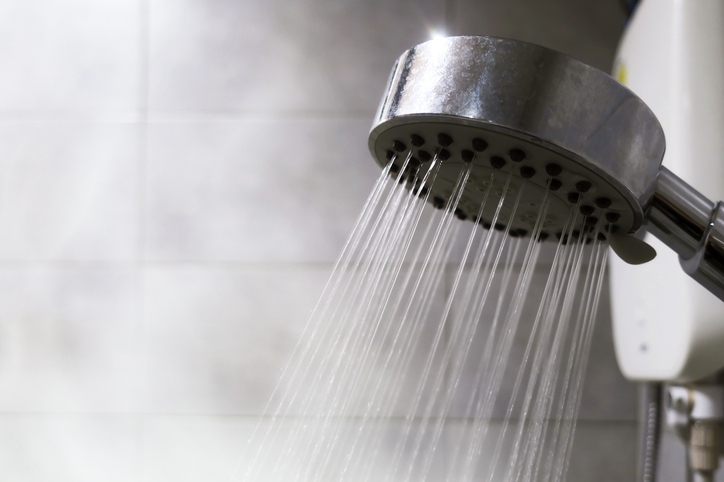
Here’s where most protocols get it wrong. They recommend 15 minutes under hot water. This creates a problem.
Hot water strips your skin’s natural protective layer. The stratum corneum, your outermost skin barrier, contains lipids and proteins that protect against pathogens and prevent water loss. Hot water dissolves these lipids. The longer you expose your skin to hot water, the more you damage this barrier.
The solution isn’t complicated. Keep the water warm enough to cause vasodilation (you’ll see skin flushing, feel the blood flow increase) but not so hot you’re sweating heavily or your skin turns lobster red. Comfortably warm. Body temperature plus a few degrees.
At this temperature, you can stay longer without destroying your skin barrier. Stay until you feel the shift. Until your jaw unclenches. Until your shoulders drop. Until your breathing slows without you forcing it.
If you insist on hotter water, keep it short. But understand you’re trading skin barrier integrity for temporary warmth. Most people would be better served by staying longer at a moderate temperature than going scorching hot for exactly 15 minutes because some protocol said so.
SHOWER SOUND AS NEURAL METRONOME
A shower generates pink noise. Thousands of water droplets striking tile at random intervals.
White noise has equal intensity at all frequencies. It sounds high-pitched and harsh, like static. Pink noise has equal energy per octave, with more power in lower frequencies. It sounds deeper and more natural, like heavy rain or wind through trees.
Pink noise is particularly effective at synchronizing brain waves into slow-wave patterns (delta and theta) associated with deep relaxation. The rhythmic, steady sound acts as a metronome, encouraging a downshift from beta (alert) to alpha (relaxed) states.
In darkness, your auditory system becomes more sensitive to compensate for lost vision. The shower’s noise creates a sound blanket that masks jarring external noises. Traffic, plumbing, neighbors. Your brain quickly identifies this constant sound as non-threatening and engages in sensory gating, stopping its processing as new information. This frees up neural bandwidth for deeper rest.
THE POOR MAN’S FLOAT TANK
Dr. Ng’s protocol is essentially Restricted Environmental Stimulation Therapy, adapted for home use. Commercial float tanks remove gravity, light, and sound. Clinical studies consistently show significant reductions in cortisol and blood pressure after single sessions.
The mechanism is de-clutching. Normally, your brain operates in a continuous loop. Action, sensation, reaction. The nervous system is always bracing for the next input. By removing the input (no light, no variable sound, neutral temperature) you break the loop.
When exteroceptive load (sensing the outside world) drops to zero, your brain automatically shifts to interoception (sensing the inside world). You become aware of your heartbeat, your diaphragm moving, the tension in your jaw.
Research suggests the physiological benefits (drops in blood pressure and heart rate) can begin within 10 minutes of sensory reduction. The dark shower delivers roughly 80% of the sensory deprivation benefits with zero cost or logistical friction.
THE CAVE INSTINCT
For early humans, open spaces meant exposure to predators and elements. Safety was found in enclosed, defensible spaces. Caves, overhangs, dense thickets. Where your back was covered and visual inputs were controlled.
This evolutionary memory persists. We’re hardwired to feel secure in refuge spaces.
A dark shower stall mimics this primal refuge. A small, enclosed, warm, wet space. In a large room, your brain unconsciously maps the entire space for threats. In a small stall, the defensible space is manageable. Darkness further shrinks the world to your immediate proximity.
For many, this environment allows temporary psychological regression. A return to a state of dependency and safety similar to the womb. The warm water and rhythmic sound (resembling blood flow in utero) trigger deep, subconscious safety cues.
One critical caveat. Darkness isn’t universally soothing. For individuals with fear of the dark or trauma history, total darkness can trigger the amygdala rather than soothe it. In these cases, a dim red nightlight is an effective compromise. Red light has minimal impact on ipRGCs and melatonin suppression, allowing visual orientation and safety while preserving circadian benefits.
IMPLEMENTATION
Timing: 60 to 90 minutes before target sleep time. This allows the rebound cooling effect to lower core body temperature before you get into bed.
Lighting: Pitch black is best. If that’s too intense, use a single candle placed safely away from water, or a battery-operated red LED light. Avoid any overhead lights. The angle from above stimulates ipRGCs more effectively.
Temperature: Warm enough to cause skin flushing (indicating vasodilation), but not so hot you’re sweating heavily or your heart is racing. Don’t end with a cold blast. That raises norepinephrine and cortisol, counterproductive for pre-sleep reset.
Duration: Stay until you feel the shift. Could be 10 minutes. Could be 30. The physiological benefits begin quickly, but the subjective experience of nervous system downregulation varies. Don’t rush it.
Safety: Balance depends heavily on vision. In darkness, you rely solely on your inner ear and proprioception. Know your shower layout intimately before turning off lights. Use a non-slip mat. Consider sitting on the shower floor. This eliminates fall risk entirely and enhances the feeling of grounding.
WHAT THIS REVEALS
The dark shower isn’t a cure-all. It won’t fix a broken diet, toxic workplace, or untreated sleep apnea. But the convergence of neurobiology, chronobiology, and physics confirms Dr. Ng’s assertion. It’s a potent, accessible tool for nervous system regulation.
In an attention economy demanding you always be on (constantly processing, reacting, predicting) stepping into darkness is a radical act of refusal. It denies the visual cortex its data feed. It denies the circadian clock its artificial noon. It denies the sympathetic nervous system its vigilance.
For however long you stay, you’re not a professional, parent, or consumer. You’re a biological organism in a warm, dark, safe space, listening to rain.
In a world defined by sensory overload, that simple return to biological baseline might be the most sophisticated reset available.
Ready to Try It?
The beauty of this protocol is its simplicity. No subscriptions, no equipment, no commute to a float tank facility. Just you, your shower, and darkness.
If you decide to experiment with the dark shower protocol, start gradually. Even 5-10 minutes can produce noticeable effects. Pay attention to how you feel afterward, not just immediately, but how you sleep that night and how you feel the next morning.
As with any wellness practice, this isn’t a magic bullet. But in a world where we’re constantly over-stimulated and under-rested, sometimes the most radical thing we can do is give our nervous system permission to power down.
Have you tried showering in the dark? I’d love to hear about your experience in the comments below.


